Introduction
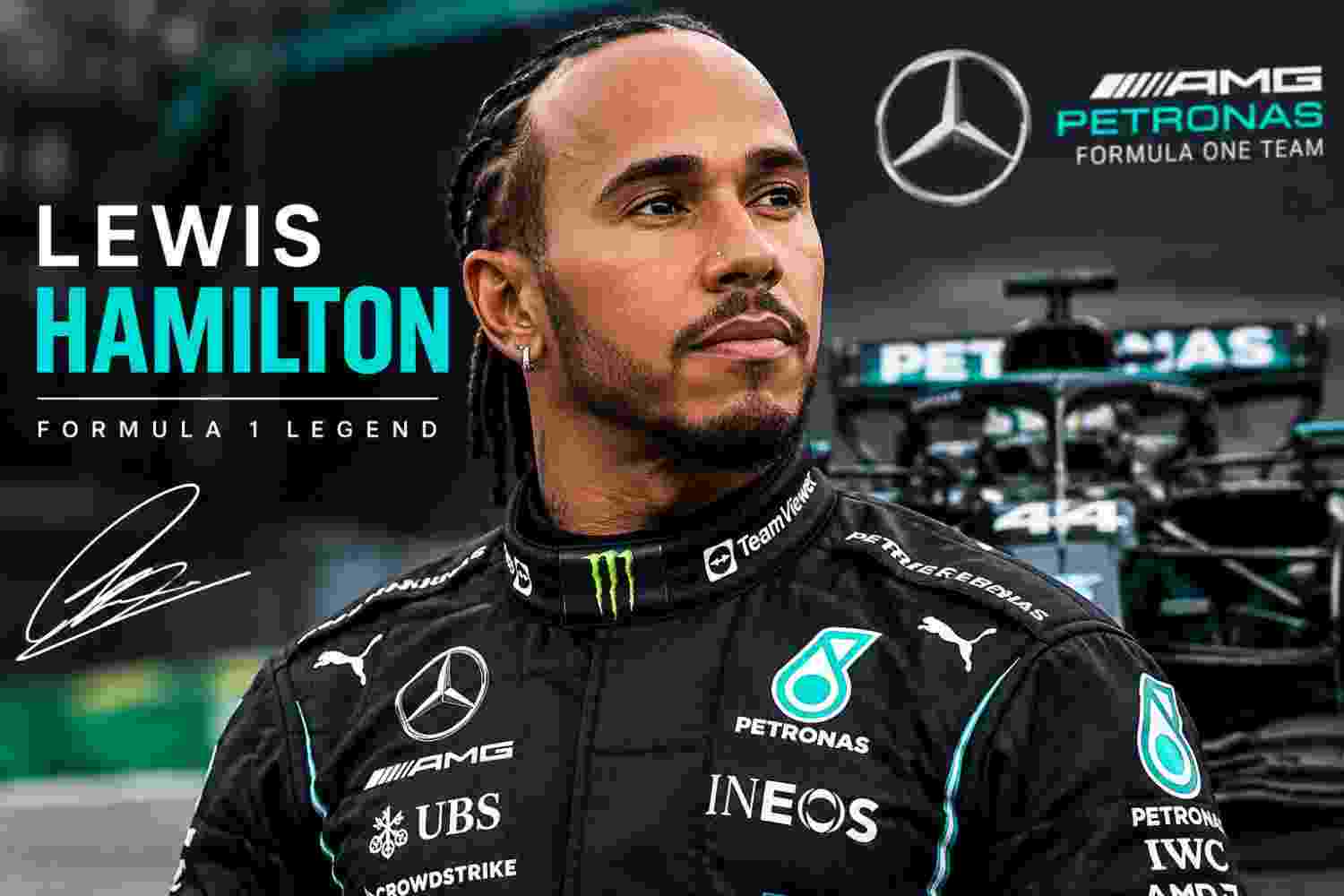
Every generation of Formula 1 produces a driver who bends the sport to their will, who leaves tracks and timelines altered in their wake. For this generation, that driver is lewis hamilton. His path from a humble upbringing in Stevenage to becoming the most statistically successful driver in F1 history is not just a sports story; it is a narrative about sheer talent, relentless work ethic, and the courage to challenge the status quo. This pillar page explores the complete journey of the seven-time world champion, breaking down his records, rivalries, and the enduring legacy he continues to build.
The Early Years: From Stevenage to Karting Prodigy
The story of lewis hamilton begins not in the glitz of Monaco but in the quiet town of Stevenage, Hertfordshire. Born on January 7, 1985, his introduction to speed came through a remote-controlled car purchased by his father, Anthony, when he was just five years old. By six, he was competing nationally. Anthony Hamilton played a pivotal role, working multiple jobs to fund his son’s passion while acting as his manager and mechanic.
At the age of eight, Hamilton was given a used go-kart, the cost of which nearly matched his family’s monthly income . This sacrifice was the foundation upon which a legacy was built. He won the British Karting Championship at the age of 10, becoming the youngest driver to do so . His talent was so evident that at the 1995 Autosport Awards, a 10-year-old lewis hamilton approached McLaren boss Ron Dennis and told him, “I’d like to race for your team one day” .
A Meeting with Destiny
That bold encounter with Ron Dennis was not merely a childhood fantasy; it was a self-fulfilling prophecy. Dennis gave him his phone number, and three years later, Dennis called. In 1998, at just 13, lewis hamilton was signed to the McLaren Young Driver Support Programme, the youngest driver ever to receive such a contract . With the financial support of McLaren, Hamilton dominated the junior formulas, winning titles in Formula Renault UK, Formula 3 Euro Series, and the GP2 Series in 2006, which sealed his promotion to Formula 1 for the 2007 season .
The McLaren Era: A Rookie Sensation and First World Title
Making his F1 debut in 2007, lewis hamilton shattered expectations. He became the first Black driver in the sport’s history, and he immediately signaled his arrival by finishing third in the Australian Grand Prix . Hamilton matched the record for the most consecutive podiums from his debut, achieving nine in a row . His first victory came at the Canadian Grand Prix in June 2007 . That year, he took the championship battle to the final race in Brazil, ultimately losing the title by a single point to Kimi Räikkönen .
However, the 2008 season brought redemption. In one of the most dramatic finales in F1 history, lewis hamilton passed Timo Glock on the last corner of the last lap of the Brazilian Grand Prix to snatch the fifth-place finish he needed to secure his first World Drivers’ Championship at just 23 years old . He was at the time the youngest world champion in F1 history . This victory was a testament to his ability to perform under intense, almost impossible pressure.
The Defining Move: Joining Mercedes
The 2012 season saw lewis hamilton announce a decision that stunned the paddock. He was leaving McLaren, the team that had nurtured him since childhood, to join Mercedes . At the time, Mercedes had only secured a single victory since returning to the sport in 2010, and many viewed the move as a risky gamble . With hindsight, it was the most consequential decision of his career.
The move to Mercedes marked a turning point in F1 history. Hamilton and the Mercedes team would go on to dominate the sport through the new hybrid-turbo era. His first win for the Silver Arrows came at the Hungarian Grand Prix in 2013 . This was just the beginning of an era of unprecedented success.
The Hybrid Era Dominance
Between 2014 and 2020, lewis hamilton and Mercedes were virtually untouchable. He won six world championships during this period, clinching titles in 2014, 2015, 2017, 2018, 2019, and 2020 . He engaged in fierce, high-stakes rivalries, first with teammate Nico Rosberg and later with Red Bull’s Max Verstappen.
A notable milestone in this chapter was his 92nd career victory at the Portuguese Grand Prix in 2020. This win moved him past Michael Schumacher’s record for the most F1 Grand Prix wins in history . He described it as an incredible moment for the entire team, emphasizing the collective effort that goes into such success .
| Key Statistic | Number |
| World Championships | 7 (Tied with Schumacher) |
| Career Wins | 106 (Record) |
| Pole Positions | 104 (Record) |
| Podiums | 207 (Record) |
| Seasons with a Win | 17 (Record) |
This data shows the sheer scale of lewis hamilton’s statistical dominance .
The New Chapter: Ferrari
The story of lewis hamilton took another dramatic turn in 2025 when he made the switch to the iconic Scuderia Ferrari team . The move, dubbed a commercial masterstroke, has allowed the veteran driver to carry his incredible experience and influence to one of the most revered teams in motorsport history .
Hamilton’s first season with Ferrari was one of adaptation and struggle, marking a winless season in Grands Prix for the first time in his career . However, the 2026 season saw a resurgence. At the Barcelona-Catalunya Grand Prix, Hamilton used an alternate pit strategy to secure his first victory for Ferrari, making him the oldest race winner in the sport since Jack Brabham in 1970 . This victory brought him to 106 wins, extending his all-time record.
Beyond the Track: A Voice for Change and Legacy
The legacy of lewis hamilton extends far beyond his world championship titles. He has used his platform to become a powerful advocate for diversity, inclusion, and sustainability. As Matt Bishop, former McLaren communications director, noted, Hamilton’s impact has grown significantly beyond F1 . It is one of his most significant achievements.
Hamilton has been a vocal supporter of the Black Lives Matter movement and has worked to increase diversity in motorsport, a historically homogenous sport. Through the Hamilton Commission and his charity Mission 44, he has sought to address barriers to inclusion and create opportunities for people of color in STEM and motorsport fields . In 2020, his influence led his then-team, Mercedes, to adopt a black livery to support the fight against racism, a commitment they have continued .
Reflecting on his own journey, lewis hamilton often speaks about the importance of using his voice. His approach to advocacy is grounded in a desire to leave the world better than he found it . He has called on the sport to improve sustainability and to better distribute its growing wealth . In 2021, he was knighted by Prince Charles for his services to motorsport, becoming Sir Lewis Hamilton .
“Honestly, his legacy and the most important thing he will have ever done is to start this conversation.” – Calum Nicholas, Red Bull Mechanic
Frequently Asked Questions About Lewis Hamilton
How many F1 wins does Lewis Hamilton have?
As of the 2026 season, lewis hamilton holds the all-time record for Formula 1 wins with 106 Grand Prix victories .
How many world championships has Lewis Hamilton won?
Lewis hamilton has won seven Formula 1 World Drivers’ Championships, tying the record set by Michael Schumacher .
When did Lewis Hamilton win his first F1 race?
He won his first Grand Prix on June 10, 2007, at the Canadian Grand Prix driving for McLaren .
Why did Lewis Hamilton leave Mercedes?
Hamilton left Mercedes for Ferrari because the move represented a new challenge and opportunity for him. The team offered him a longer contract and he sought to revitalize his career with the iconic Scuderia .
How did Lewis Hamilton start his racing career?
He started his racing career in radio-controlled cars before progressing to go-karts at the age of eight. His talent was nurtured by his father, Anthony, and he was later signed to McLaren’s young driver program at age 13 .
Conclusion: The Greatest of All Time?
The career of lewis hamilton is defined by remarkable statistics, record-breaking performances, and an unwavering commitment to his values. From his first laps in a kart to his record-shattering victories in Formula 1, he has redefined what it means to be a champion. His journey is not just one of speed and skill, but of resilience and the power of using one’s platform for positive change. Whether you appreciate his driving or admire his advocacy, the impact of lewis hamilton on the world stage is undeniable. He has not only written his name in the history books but has changed the very narrative of Formula 1.